During each month of the female sexual cycle, there is a cycle increase and decrease of FSH and LH.
Pre-ovulatory Phase:
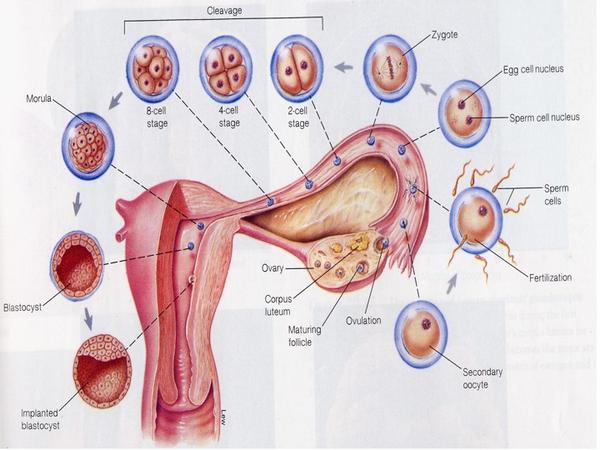
The pre-ovulatory phase is the time between menstruation and ovulation. During the first few days after the beginning of menstruation, concentrations of FSH & LH increase several fold. These hormones cause accelerated growth of 6-12 primary follicles each month. When under the influence of FSH, the group of follicles continues to grow and secrete estrogen, one dominant follicle becomes mature graafian follicle i.e. continues to increase its estrogen production under the influence of an increasing level of LH. Small amounts of progesterone are produced by the mature follicle a day or two before ovulation.
Ovulatory Phase:
Estrogens, which have been liberated, stimulate the repair of the endometrium (uterus lining) and thicken it. New ovulation occurs on the 14th day i.e. there is rupture of mature graafian follicle. The post-ovulatory phase is the period between ovulation and the next menses. A single ovum is expelled from an ovarian follicle into the abdominal cavity in the middle of each monthly cycle. This ovum then passes through one of the fallopian tubes into the uterus and if it is fertilized by a sperm, it implants in the uterus where it develops into a fetus.
Menstrual Phase:
If fertilization does not take place, this ovum gets released in the menstrual phase. During the menstrual phase, follicles in each ovary begin to enlarge. Menstrual flow from the uterus consists of 50-150 ml of blood, tissue fluid, epithelial cells derived from the endometrium.
When is fertilization and pregnancy most likely to occur?
Fertilization of an egg can only occur if you have intercourse around the time of ovulation, the so-called 'fertile phase' of the cycle. If you are ovulating, this takes place l4 days before the onset of a period. This is a reasonably predictable event if you have a regular cycle but may be very unpredictable if you have a very erratic cycle.
What is necessary in order for pregnancy to occur
Ovulation is essential;
Intercourse must take place during the fertile phase of the cycle;
Your partner's sperm count must be adequate to ensure that a sufficient number actually reach the egg;
The mucus in the cervix must not be unfavorable and/or hostile to the sperm;
There must not be any mechanical barrier preventing fertilization from taking place, such as blocked fallopian tubes or adhesions around the ovaries preventing the egg from gaining access to the tube and sperm.
Sorry. Due to our site's regulations and policies, your message has not been posted. Our moderating team has been notified about your message. If the message is found to be genuine and still did not get posted, you may not post the message again as it will automatically get posted for you within 24hrs time (excluding weekends).
- The Indiaparenting Team